

Goodnight Moon
The long impact of a short book

If you are under the age of 75, you have likely read—or had read to you—the picture book Goodnight Moon. In many cases, you may have had it read to you dozens if not hundreds of times as a child, and then, as an adult, read it dozens or perhaps hundreds of times to your own children. I dare say there may be no greater shared literary experience among Americans beyond Where the Wild Things Are and The Very Hungry Caterpillar, even counting the books most of us read in high school.
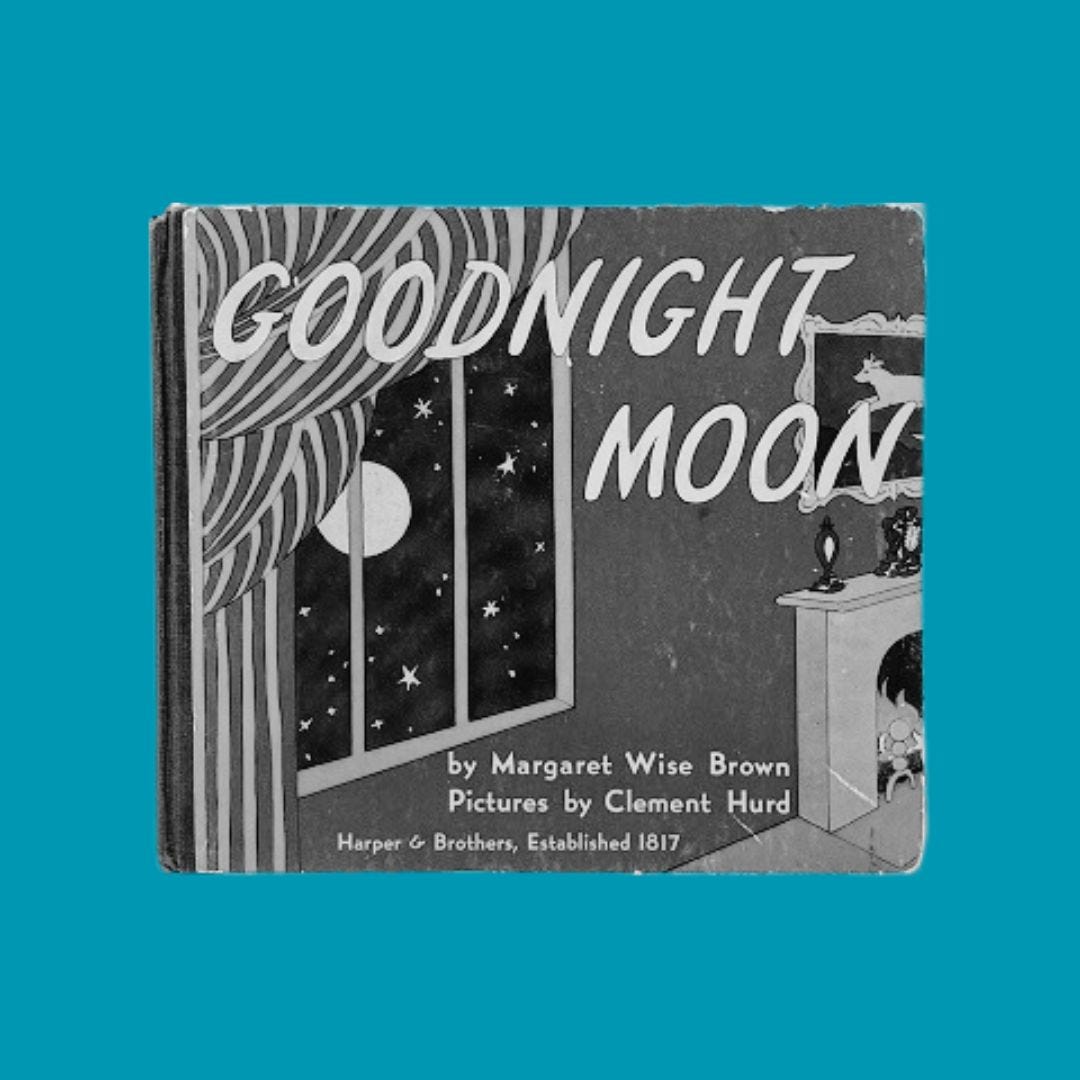
First published in 1947, Goodnight Moon was written by Margaret Wise Brown and illustrated by Clement Hurd. The two had collaborated on books before, including the runaway hit The Runaway Bunny in 1942. Those two books, and a third published in 1949 called My World—which is subtitled A Companion to Goodnight Moon—were later published together in a collection called Over the Moon. The three are part of what we would now call a “shared universe.” Among other connections, there’s a picture from The Runaway Bunny on the wall in Goodnight Moon, both books feature the same painting of the cow jumping over the moon, and My World takes the bunny from the green room into the outside world.
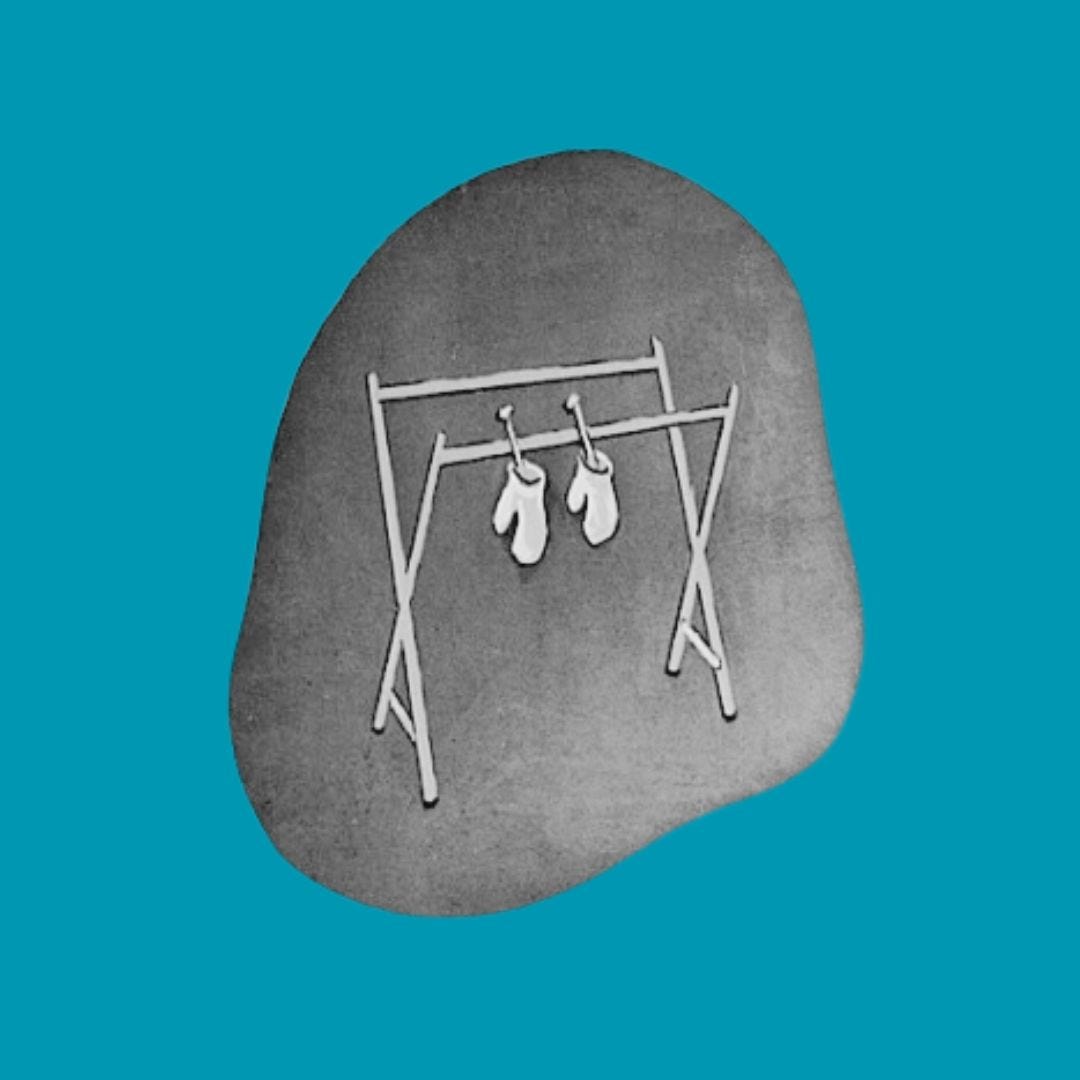
The Runaway Bunny is still in print, but Goodnight Moon is the one everybody still reads today. It’s a straightforward bedtime tale: Over the course of an hour (as measured by two small clocks in the room), a baby bunny in PJs first observes, and then says goodnight to, everything in the room. That includes, among other things, two kittens, two mittens, a pair of clocks and a pair of socks, the stars, the air, a bowl of mush, and an old lady whispering “hush.”
That’s it. There’s no plot. No conflict. No rising and falling action. Author Susan Cooper has called Goodnight Moon more a “deceptively simple ritual” than a story. It is a book that slowly lulls both reader and listener to sleep, which is perhaps the real reason behind its enduring popularity.
I’m one of those people who had the book read to me hundreds of times as a child, and then ended up reading Goodnight Moon dozens of times to my own daughter when she was young. (Being the daughter of a kids book writer and a kids book seller, Jo had an enormous picture book collection, from which we read more broadly than deeply. She did have her favorites, but Goodnight Moon wasn’t one of them.) Re-reading Goodnight Moon for this essay though, I’m suddenly struck by how modern it feels.
For one thing, there is very little text. By my count, there are just 130 words in Goodnight Moon. A lot of “classic” picture books are so interminable they are practically unreadable as bedtime stories today. Seriously—try reading The Little Engine that Could (1,167 words) or The Poky Little Puppy (1,163 words), and you’ll see what I mean. (On second thought, don’t. They’re terrible. Read a Mo Willems picture book instead, I beg you.) Every present-day children’s book agent and editor you talk to will tell you: when it comes to modern picture books, less is more. Most don’t want to see a manuscript much longer than 500 words anymore, unless it’s non-fiction, or for children transitioning into chapter books. And shorter than 500 words is even better.
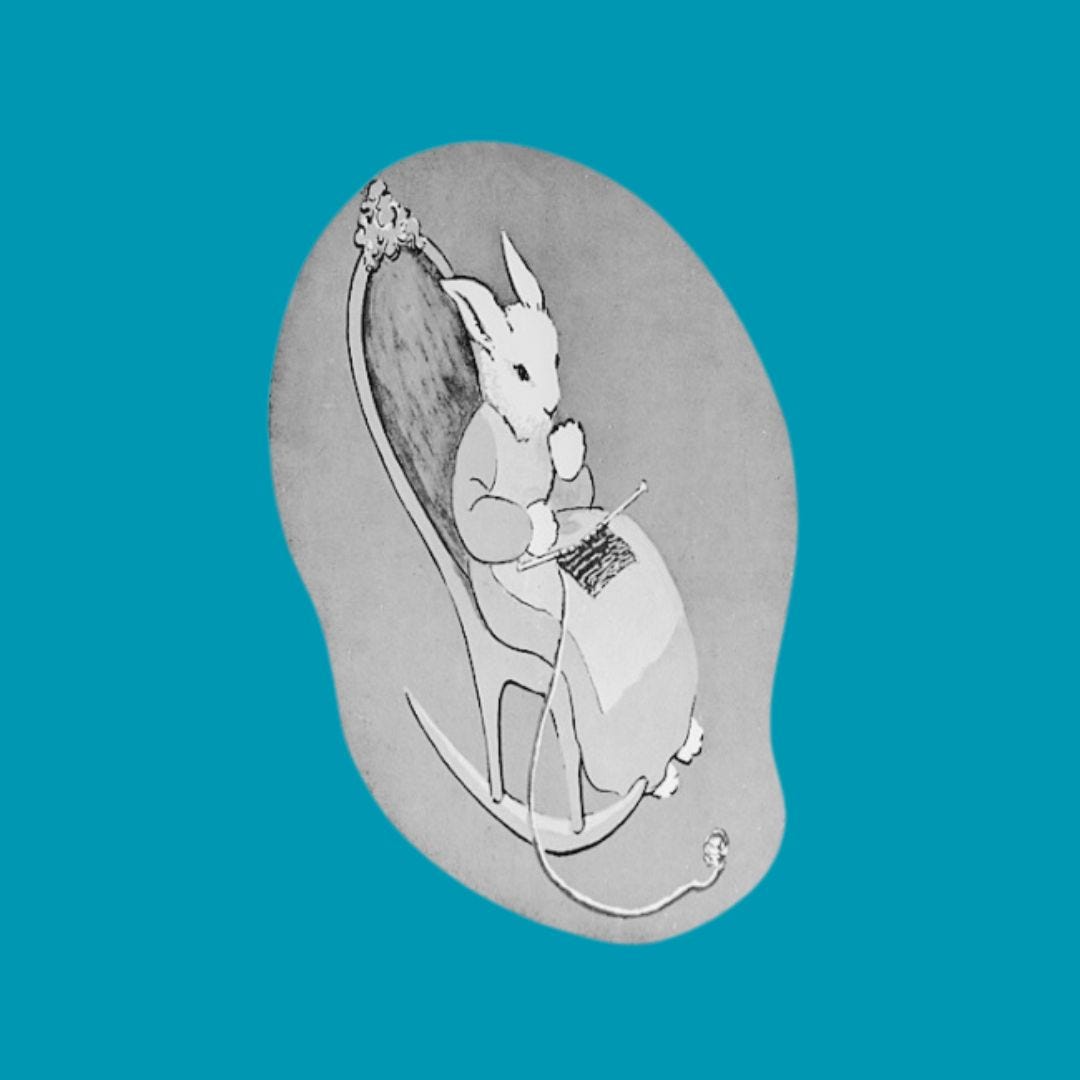
It's also great that the bunny in the bed has no gender, which allows every child who reads it to see themselves in the bunny. And the old lady whispering hush? She’s just that. Not the “mother,” not the “granny.” Just an old lady who sits protectively in a chair across the room, knitting while the light fades. I also love that one of the pages is absolutely blank but for the words “Goodnight nobody.” How metaphysical is that? I mean, Brown probably just needed something to say goodnight to that worked with the meter of the poem, but still. It’s awfully profound for a baby’s bedtime book. And talk about meta—there’s a copy of Goodnight Moon on the bunny’s bedside table!
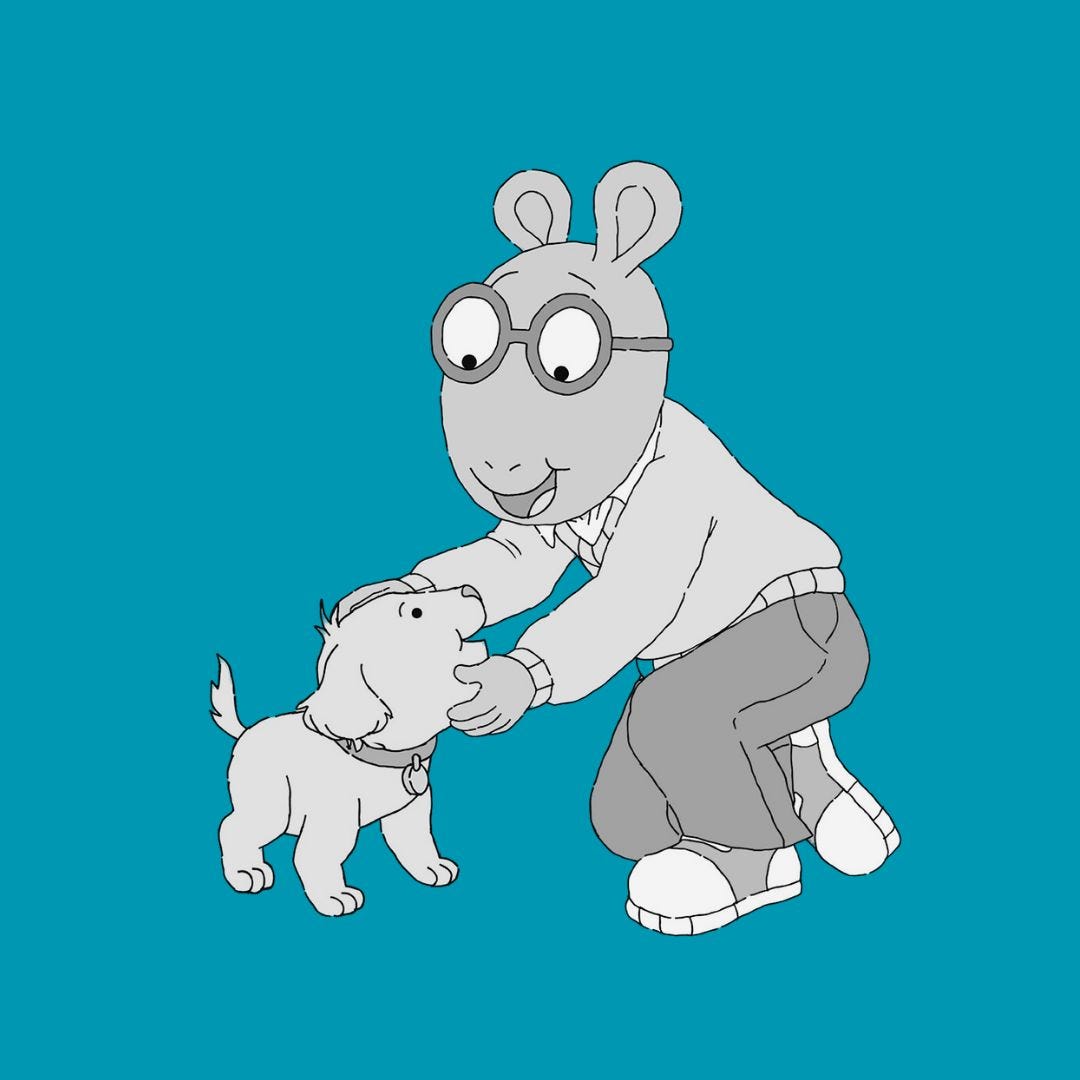
True, most kids don’t have brushes and combs by their bedsides these days, and very few American kids are served anything called “mush” anymore. (I hope.) There is also a tiger skin rug next to the bed, which, while definitely uncool now, also begs the larger question of the hierarchy of animals in these bunnies’ world. Kind of like how all the people in the Arthur books are different animals…but also have animals as pets? (Listen, it’s probably better if we don’t look too closely at any of this.)
Margaret Wise Brown claimed the story came to her in a dream one night in 1945, and she wrote the story in a morning. She didn’t say one way or another what the characters looked like, so Hurd drew them as bunnies. Why not? They’d already done well with rabbits in The Runaway Bunny, and as Hurd later confessed, he was a lot better at drawing bunnies than he was at drawing humans. At one point, Brown and Hurd got the strange idea to not use their real names on the book, and instead be credited as “Memory Ambrose” and “Hurricane Jones.” Their porn names, maybe? Anyway, their editor, the now legendary Ursula Nordstrom, thankfully talked them out of it.
Goodnight Moon wasn’t a hit right from the start. It sold 6,000 copies in its first year, but by 1953, sales had dropped to 1,500 copies a year. It didn’t help that the highly influential librarian Anne Carroll Moore hated the book. The long-time head of the New York Public Library’s Children’s Department, Moore deemed Goodnight Moon “an unbearably sentimental piece of work,” and actually had it banned from all NYPL children’s book shelves until 1972!
Goodnight Moon was far from the only book Moore disliked. She detested E.B. White’s Stuart Little so much that after reading an advance copy of the book, she wrote a fourteen page letter to White imploring him to not publish it—or to at least publish it anonymously, “lest his reputation be fatally damaged.” And according to children’s book historian Anita Silvey, Moore hated White’s Charlotte’s Web so much that she used her influence to keep it from winning that year’s Newbery Award, the American Library Association’s annual award for the most distinguished contribution to American literature for children. Charlotte’s Web won a Newbery Honor instead. The 1953 Newbery Medal went to The Secret of the Andes, which is long out of print and now remembered only as the answer to a trivia question.
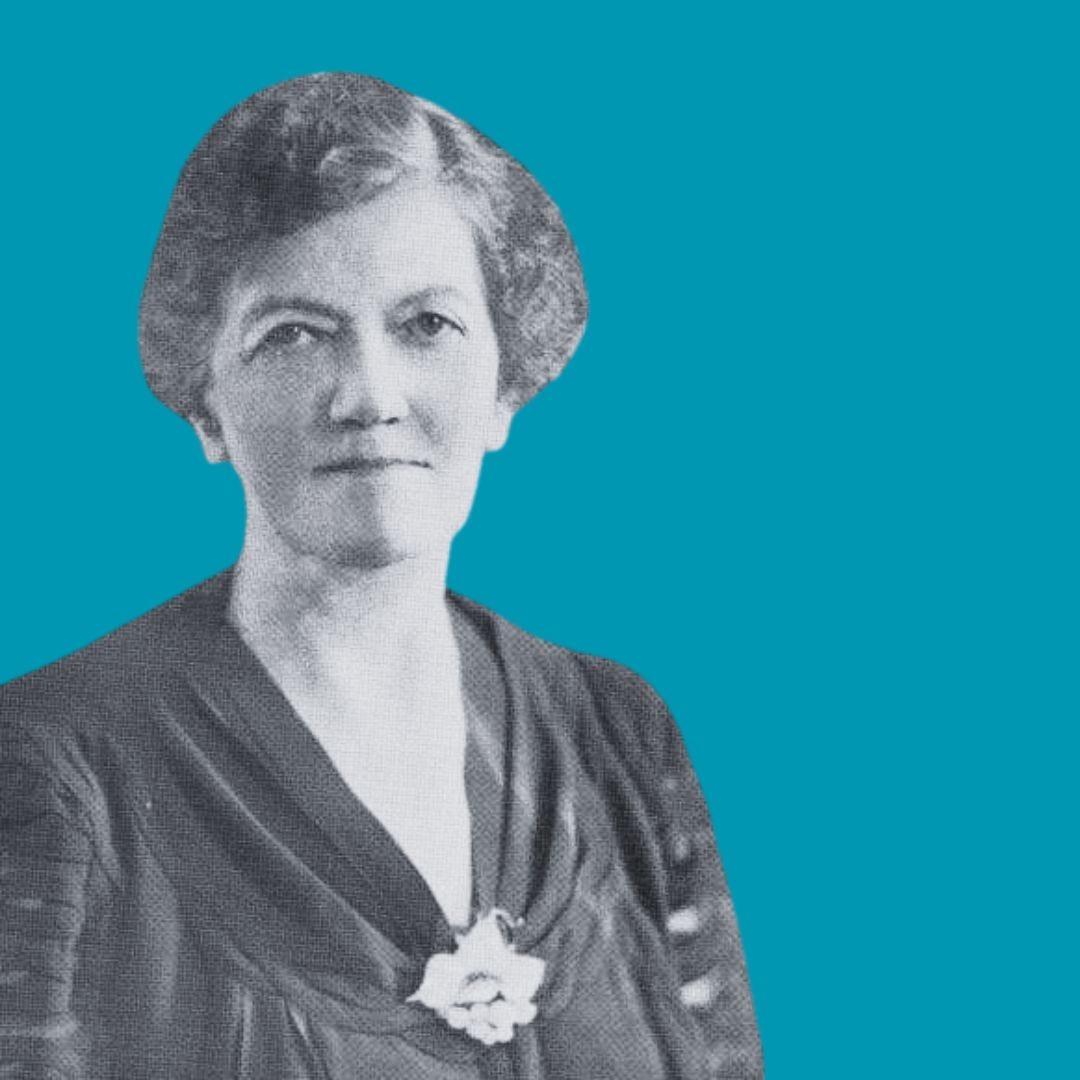
I want to stop here and talk about Anne Carroll Moore for a second, even though she’s only tangentially connected to Goodnight Moon. Moore often comes off like a villain in anecdotes like these, and rightfully so. But in reading more about her, I was surprised to learn how much she simultaneously did for the development and advancement of children’s literature in the United States.
Anne Carroll Moore was born in 1871, and became a librarian when she was told that, because she was a woman, she couldn’t be a lawyer. “Librarian” was something of a new profession back then, and the job of “children’s librarian” was non-existent. In that era, children were seen as nuisances in libraries, and were often banned from even entering libraries until they were fourteen years old. So when the Pratt Institute hired Moore in 1896 to create their first children’s room, there really wasn’t much of a precedent. To figure out how to do it, Moore visited kindergartens (which were also pretty new at the time), and toured ethnic neighborhoods in the area to interview kids on the street. She ended up building a space for kids with child-sized furniture, open stacks, cozy reading nooks, regular story times, puppet shows, summer programming, and a staff of librarians committed to—and enthusiastic about—working with children. When it opened, the Pratt Children’s Room had a line of kids around the block waiting to get in.
In 1900, Anne Carroll Moore attended the American Library Association’s annual conference, and helped organize and chair what would become today’s ALSC—the Association for Library Service to Children. The same ALSC that gives out the Newbery, Caldecott, and Printz Awards.
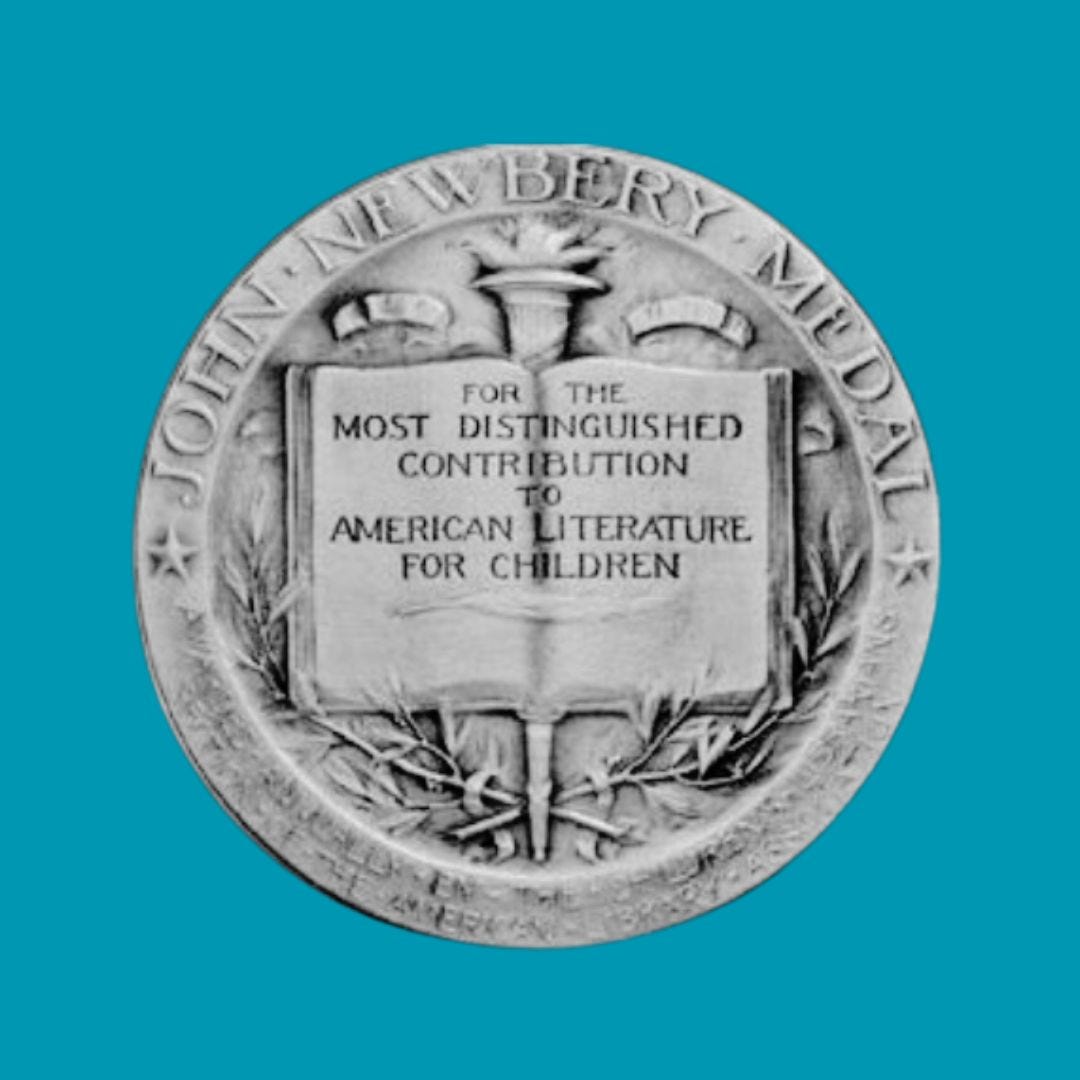
After a decade at Pratt, Moore was hired away by the New York Public Library, where she opened the Central Children’s Room, and oversaw the children’s sections at all NYPL branches. She lobbied for—and won—the right for children to actually check books out from the library—something they couldn’t do previously. By 1913, children’s books accounted for one third of all books borrowed from New York Public Library branches. In 1918, Moore gave a series of lectures to New York publishers that stressed the need for books that entertained young readers instead of browbeating them with morality tales, thereby helping kick off the kidlit industry we know and love today.
But perhaps more importantly—and more impressively for the early 1900s—Moore insisted on a policy of inclusion at the New York Public Library, celebrating the various backgrounds of New York immigrants through her storytime choices, poetry readings, and the books she put on the shelves. In 1937, to head up the children’s department at the NYPL’s Harlem Branch, Moore hired young African-American librarian Augusta Baker, who went on to become Head of Children’s Services in 1961. Moore also hired and mentored Pura Belpré, the first Puerto Rican librarian in New York City, in 1929.
For all that, says Betsy Bird, the book blogger and longtime NYPL librarian who is now the Collection Development Manager at the Evanston Public Library, “If Anne Carroll Moore didn’t like a book, she could effectively kill it.” Moore is said to have owned a custom-made rubber stamp that said NOT RECOMMENDED FOR PURCHASE BY EXPERT, and apparently enjoyed using it. Moore loathed any book “too precious, too educational, too much of the cult of the child.” She was also not afraid to criticize the book choices of young readers—something that would make most modern day children’s librarians, brought up on the primacy of student choice, cringe. When Moore snubbed Margaret Wise Brown and her editor Ursula Nordstrom by not inviting them to a big NYPL kids book event, say Bird, Julie Danielson, and Peter D. Sieruta in their riotously entertaining book Wild Things: Acts of Mischief in Children’s Literature, “[Brown] and Nordstrom had a delightful tea party on the steps of the building, forcing all the guests to walk around them to get inside.”
Let’s just mark Anne Carroll Moore’s relationship with American kidlit as “It’s Complicated.”

Despite Moore’s efforts to bury Goodnight Moon, she did not succeed. As more and more baby boomers were born post-World War II, librarians gave way to parents as the primary buyers of children’s books, and parents, in desperate need of something to put all those booming babies to sleep, flocked to Goodnight Moon. By 1970, Goodnight Moon was selling almost 20,000 copies a year. By 1990, the total number of lifetime copies sold exceeded four million. A decade later, Goodnight Moon was selling 800,000 copies annually. In 2022, to mark the book’s 75th anniversary, astronauts on the International Space Station livestreamed a read aloud of Goodnight Moon with students all over the world.
Alas, Margaret Wise Brown lived to see none of this. On a book tour in France in 1952, Brown came down with stomach pains. She went to a hospital in Nice, where she had an ovarian cyst removed, along with her appendix. She recovered well, and to prove to a nurse how good she was feeling, she threw one of her legs into the air in a kind of hospital bed can-can kick, and promptly blacked out. It turned out Brown had an undiagnosed embolism in that leg, and kicking dislodged it. The blood clot went right to her brain, and moments later she was dead at the age of 42. Just a week later, she had been due in Panama, where she was set to marry a scion of the Rockefeller family aboard his yacht.
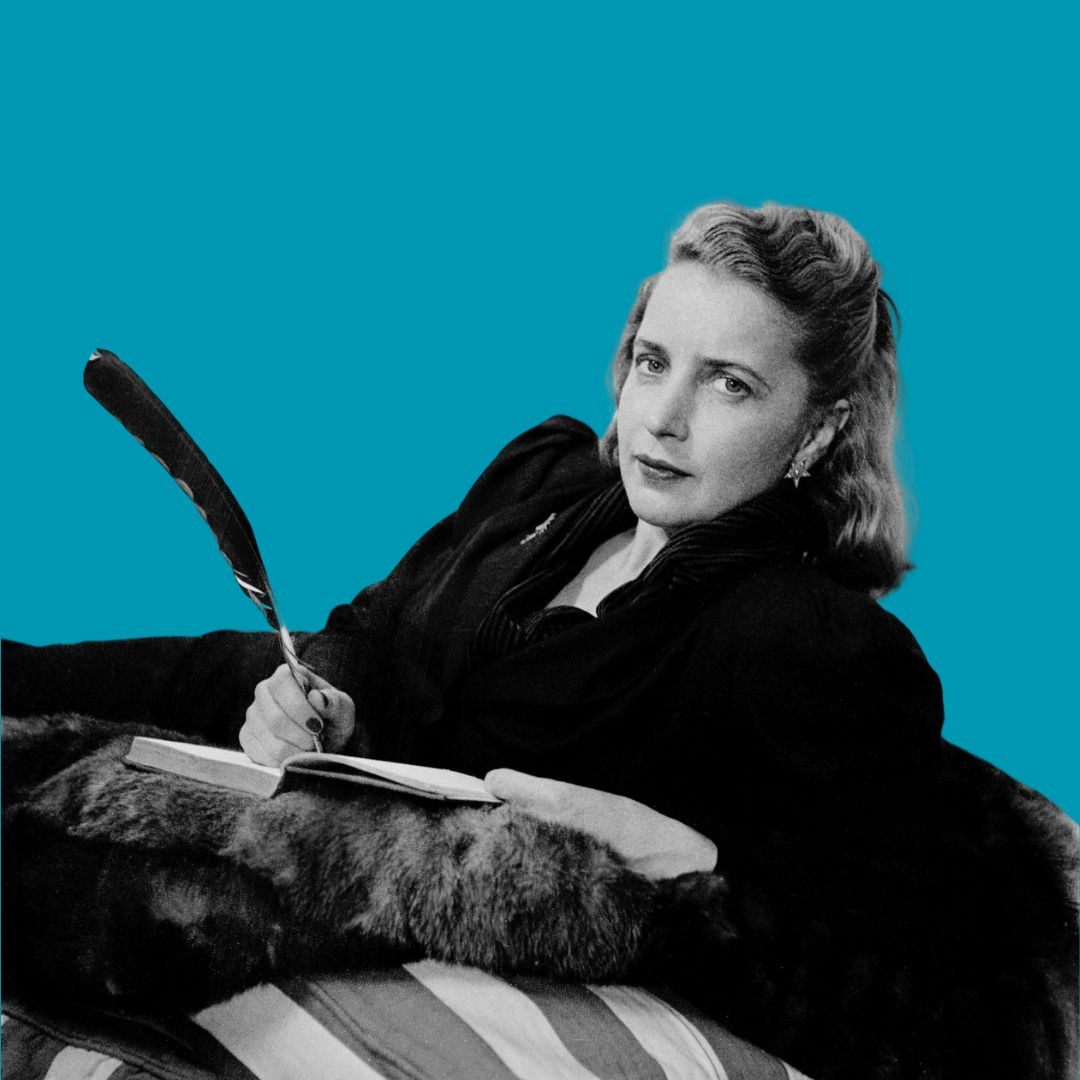
A last, odd punctuation mark on the story of Margaret Wise Brown and Goodnight Moon is the matter of Brown’s inheritance. Despite her untimely demise, Brown was, by the time of her death, the author of more than one hundred books for young readers. None of them were making a fortune in royalties (yet), which is perhaps why she felt comfortable leaving most of her literary estate—including The Runaway Bunny and Goodnight Moon—to Albert Edward Clarke III, the middle son of her friend Joan MacCormick. Why she chose Albert as her sole heir has been a matter of much debate. Perhaps it was a whim. Perhaps it was because Brown herself was a wild, free spirit, and liked to do things differently. Wild Things wonders if it’s because Albert looked something like her, perhaps making Brown think of the boy as the son she never had.
Albert, who died in 2018 at the age of 74, claimed that Margaret Wise Brown was his birth mother, and that as a boy he overheard the woman who raised him reveal the secret to her sister. The authors of Wild Things are quick to point out that “no one in Clarke’s family credits this claim,” and Margaret Wise Brown scholar Leonard Marcus agrees. “This is the kind of thing that would have come out,” he promises—just as we now know, for example, that Brown was in an intimate relationship with poet, playwright, and actress Blanche Oelrichs for more than a decade before Oelrichs’ death in 1950.
The saddest part of the Albert Clarke inheritance story is that the money doesn’t seem to have done him much good during his lifetime. As the royalties from Goodnight Moon steadily increased, so did Albert’s troubles. Albert dropped out of high school, got kicked out of the Marines, and over the years was repeatedly arrested for a variety of crimes, including joyriding, burglary, vagrancy, possession of marijuana, petty larceny, criminal possession of a weapon, and assault. An article in the New Republic even claims that Albert tried to kidnap his daughter from her mother, who had custody. All the while, he apparently squandered much of the money he earned from Goodnight Moon. Albert’s four children are now the inheritors of Goodnight Moon’s copyright. Let us hope it brings them the good night’s sleep their father never found.
Goodnight Moon Trivia
The answer to last week’s Dark Side of the Moon trivia question—Playing The Dark Side of the Moon from the roar of the MGM Lion at the beginning of what film results in numerous moments of apparent synchronicity between the movie and the album that are now collectively referred to as “The Dark Side of the Rainbow”?—is The Wizard of Oz!
Here’s your Goodnight Moon trivia question:
What is the last thing the bunny says goodnight to in Goodnight Moon?
Drop your answer in the comments if you didn’t have to look it up!
This one I know (so many read aloud's getting little ones to sleep). Good night noises everywhere.
Alan, Julie Webb gifted our family with Goodnight Moon. As for The Little Engine That Could, you had the book and 45 record that you would play repeatedly 24/7 were it possible!